 search
 language
 menu
menuWater Conditions in Japan Surprisingly Unknown to Foreign and International Students
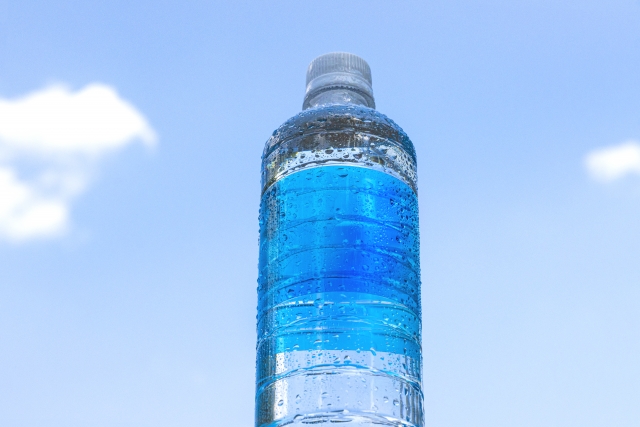
In this issue, we would like to introduce the water situation in Japan, which is surprisingly unknown to foreigners and foreign students.
There are many things about the water situation in Japan that are not well known, even to the general public, and perhaps some of the contents may be new to Japanese people.
If you delve deeper into the water situation in Japan, you will find out some very interesting things.
Contents
(1) Where is water produced?
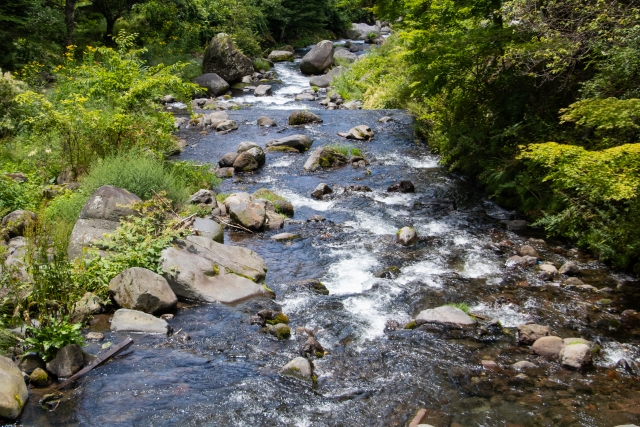
Where is the water we use in Japan produced?
As you might imagine, most of the tap water comes from rain or snow that falls and flows down rivers.
The water is then taken from that river and transported to a facility called a water purification plant.
In some areas, there are no rivers running through them, so ponds called “haisuichi” are built in the mountains.
In areas where rivers do not flow, water from rain and snow is temporarily stored in these ponds.
Water is taken from the river or pond, converted to clean water at a facility called a water purification plant, and then transported to another facility where it is stored.
(2) Where does the water go through to get to my house?
Usually, when you turn on the faucet at home, water comes out, right?
It is a mystery how the water is delivered to your house.
In fact, water that has been cleaned at a water purification plant is collected at a facility and, at the same time, is subjected to extremely high pressure before being discharged into pipes that run under the road.
This pressure is very important, because if the pressure is too weak, no water comes out when you turn on the faucet.
Electric pumps are used to apply water pressure to the pipes, so although it may not look like it, the water is delivered under strong pressure to the base of the faucet.
As you may have seen on the news, when a pipe running under a road breaks, water spurts out like a fountain because of the pressure.
Is tap water safe in Japan?
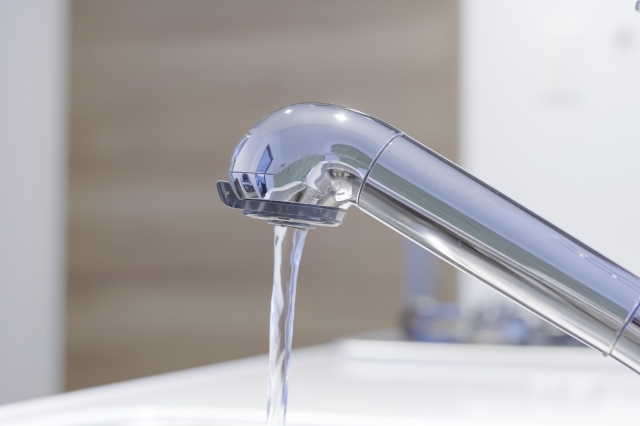
In conclusion, Japanese water is very safe.
This is because the standard values set by the government are set to be among the strictest in the world, ranking about 10th in the world if you count from the top.
According to some scholars’ research, there are only 10 to 15 countries in the world where tap water can be drunk directly from the tap, and Japan is one of those countries.
However, there is also the issue of the aging of the pipes that run under the roads mentioned earlier.
Most of the pipes for Japan’s water supply were installed about 50 years ago, so what is there now needs to be replaced one by one.
However, the municipalities that manage the water supply do not have the budget to replace those pipes immediately, so they are replaced little by little every year while prioritizing safety.
(4) Where does the flushed water go?
Water used in the house is flushed down a pipe called a sewer system.
The flushed used water is then taken to a treatment facility called a purification center.
A purification center is a facility that cleans dirty water and returns it to nature.
Although not actively publicized, the purification center uses microorganisms to break down the dirty water and clean it.
The technology is said to be among the finest in the world, and this water is cleaned until it reaches the strict standards set by the government, so that even if it flows in our daily lives, we do not notice it.
5) Background of water supply and sewage systems
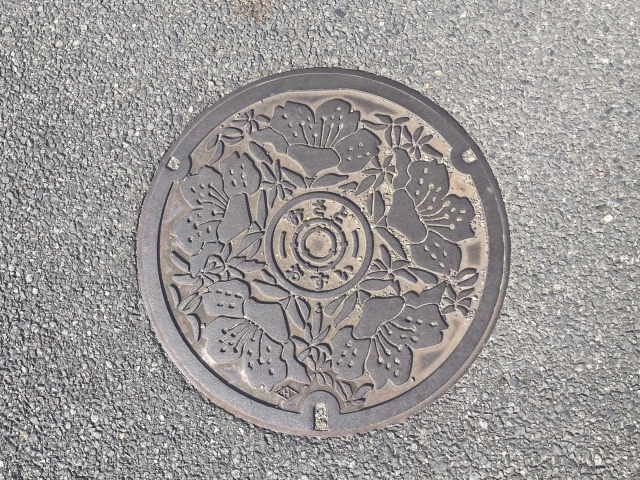
The clean water that comes out immediately after we turn on the tap and the dirty water that flows away after use are integrated into the environment in a large cycle.
As a background to Japan’s particular focus on water, the people who had previously taken well water and mountain water for granted became ill one after another.
Upon closer examination, it was found that well water and mountain water contained a variety of invisible bacteria that poisoned the human body.
Therefore, the government distributed subsidies to each municipality to develop a system to provide safe tap water.
However, once the safe supply of tap water began to be provided, the amount of water used by the public increased, and the phenomenon of water freely dripping after use occurred.
Drinking water became cleaner and less hazardous to health, but at the same time, the dirty water began to pollute the environment.
The next step for the government was to develop a sewerage system.
Therefore, the timing of the construction of water pipes and sewer pipes in Japan is often different.
Conclusion
Right now in Japan, water pipes are due for renewal all at once, and in 20 to 30 years, sewer pipes will also be due for renewal. In our society, a stable water supply and safe sewage treatment are taken for granted, but this is due to the efforts of local governments, who are working day in and day out to make this a reality.
Although our water supply and sewage treatment are among the safest in the world, our rates are set at one of the lowest in the world.
It goes without saying that water is a precious resource, just like fuel.
It might be a good idea to look at these things we take for granted from time to time and try to use water without forgetting to be grateful.