 search
 language
 menu
menuFive things that foreign residents and students should know about life in Japan

In the past, Japan was known as a technological superpower, creating a variety of technologies and services and creating a unique culture. The karaoke and e-mail pictograms that you are familiar with were also born in Japan.
Today, Japan continues to produce such technologies and services, and there are many good things to know about them as you go about your daily life.
Today, we would like to introduce five of our favorites.
Contents
(1) Convenience Store Receipt Deals
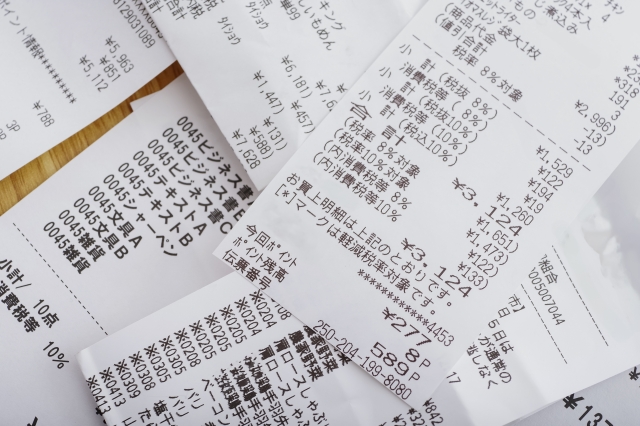
If you are a foreigner living in Japan, you have probably used a convenience store at least once.
In fact, depending on the timing, convenience store receipts can be very beneficial.
Depending on the store’s affiliation, they regularly put a lot of effort into promoting the sale of various products. The products may be bottled juices or boxed lunches.
The receipt you get after shopping at the time of that sales promotion may have a barcode on it.
Near the barcode is the name of the product and the price of the discount, which is used as a discount coupon for the next purchase of the same product at the same affiliated convenience store.
If you ever shop at a convenience store, please check your receipt.
(2) How to dispose of used plastic bottles and empty cans in the most economical way.
Many major supermarkets in Japan have their own rules for earning points for bringing in used plastic bottles and empty cans.
The purpose is to take back used plastic bottles and empty cans for recycling.
You do not earn money if you throw them in the trash can by the vending machine, but if you bring them to a store that has that rule, you can earn points, which you can exchange for discount coupons or make purchases with the points you have earned.
If you find a major supermarket that offers such a service, please try to bring in your used plastic bottles and empty cans.
You will experience two good things: protecting the environment and benefiting yourself.
(3) Old newspapers and magazines are turned into garbage bags and toilet paper.

In Japan, there are companies that collect old newspapers and magazines by truck on holidays.
The collected old newspapers and magazines are taken directly to recycling centers, where they are transformed into new paper and toilet paper.
In exchange for accepting the old newspapers and magazines free of charge, the collector will give you a garbage bag and toilet paper for a fee.
If you see a truck collecting them, try handing them your old newspapers or magazines. A smiling uncle or aunt will give you a garbage bag or toilet paper as a gift.
(4) To use the grounds and gymnasium for free
To practice soccer or baseball, you need to rent a playing field for a fee.
Also, to practice indoor sports such as basketball and volleyball, you need to rent a gymnasium for a fee.
However, there are many grounds and gymnasiums in Japan that can be rented for free.
These are the grounds and gymnasiums of local elementary schools.
Public elementary school grounds and gymnasiums have a system that allows them to be rented free of charge to non-profit individuals and groups.
If you would like to rent them for free, please ask a teacher at the elementary school.
(5) Find a free Wi-Fi spot!

In the 2000s, when Japan’s IT industry grew rapidly, free Wi-Fi spots were established mainly in public facilities in Japan.
Recently, however, Wi-Fi is not limited to public facilities, but is also spreading to stores in town, long-established private stores, and in some cases, community-managed parks and meeting halls.
This is because the government continues to subsidize businesses that install them so that inbound tourists do not have to worry. Although invisible, radio waves are flying everywhere.
Some cities, towns, and villages publish maps on their websites to help you find free Wi-Fi spots, so please check them out if you have any trouble.
Conclusion
These are five things that foreign residents and students should know about living in Japan.
Japan has almost no natural gas or oil, which are called energy. Therefore, we have acquired the ability to create new technologies and services through wisdom and ingenuity.
There are many “good things to know” in addition to the ones we have mentioned here, so please try to find them yourself.